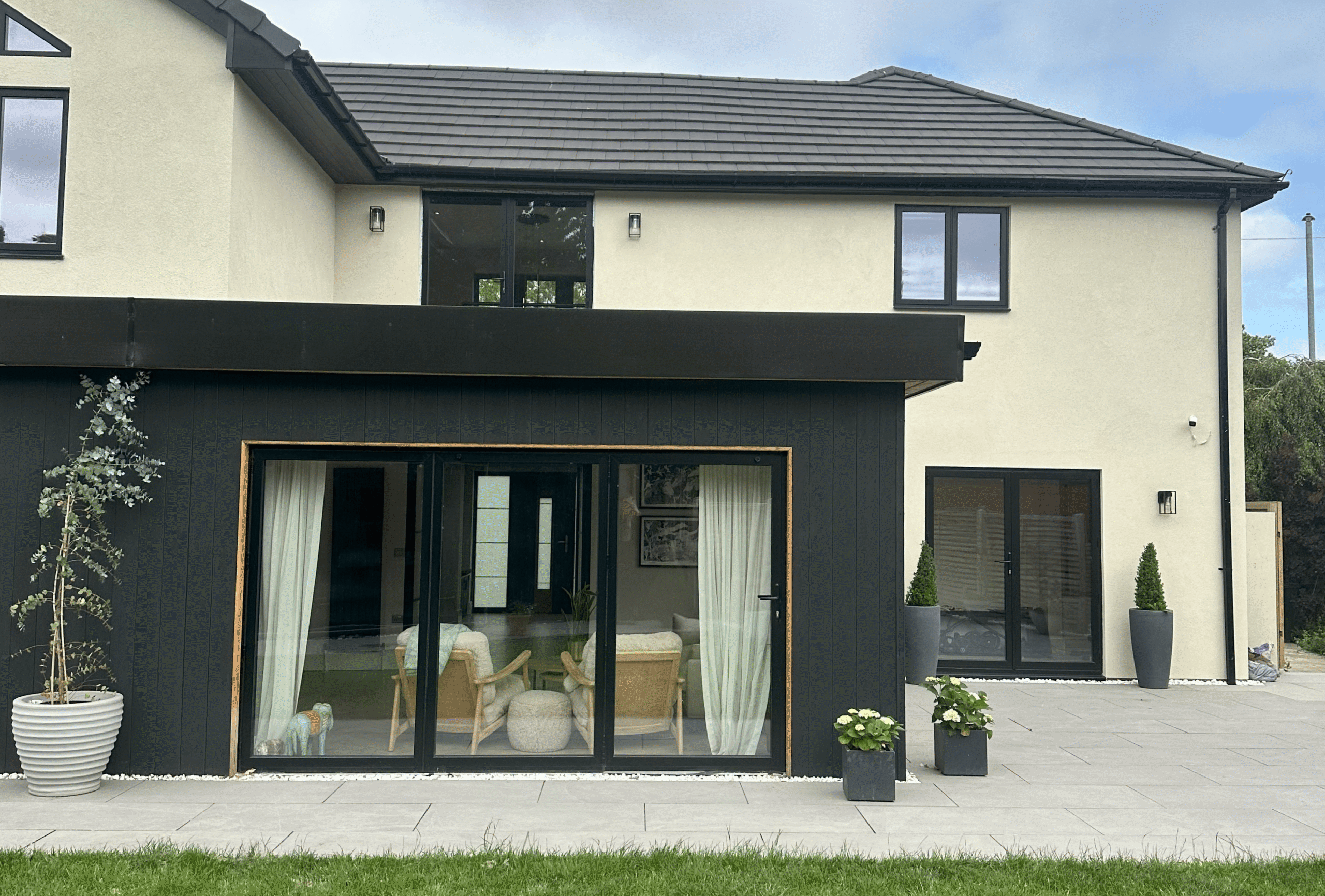
Bifold and sliding doors are one of the most popular home improvements in the UK, and the good news is that in most cases you will not need planning permission to fit them. There are some important exceptions, though – and even when planning permission is not needed, the work still has to meet Building Regulations. Here is what you need to know for a house in England.
Replacing existing doors or windows
If you are replacing existing doors or windows with new ones that are similar in appearance to those already on the house, this is normally covered by permitted development and you will not need to apply for planning permission. Swapping old French doors or a patio door for new aluminium bifolds in the same opening usually falls into this category.
Making a new or wider opening
Knocking through a wall to create a new opening, or widening an existing one for larger doors, may still be permitted development – but it depends on where the opening is and how the work changes the look of the house. Structural work also needs a suitable lintel or steel beam and Building Regulations approval.
Bifold doors in a new extension
If the doors are part of a new extension, they are covered by the planning rules for the extension itself. Many single-storey rear extensions can be built under permitted development, while larger extensions need planning permission or prior approval. Check the extension rules before you finalise your door sizes.
When you are likely to need permission
- Listed buildings – significant changes need listed building consent.
- Conservation areas, National Parks and Areas of Outstanding Natural Beauty – extra restrictions often apply, so speak to your council first.
- Article 4 directions – some councils remove permitted development rights in certain areas.
- Flats and maisonettes – these do not have the same permitted development rights as houses.
- Leasehold properties – you may also need your landlord’s or management company’s permission.
Building Regulations still apply
Whether or not you need planning permission, new and replacement doors must meet Building Regulations for energy efficiency, safety glazing and, where relevant, structure. Replacement doors are usually signed off by an installer registered with a competent person scheme such as FENSA or Certass; new openings and extensions normally need building control approval. Our U-values and Building Regulations guide explains the basics.
Check before you buy
Rules can change and local policies vary, so always check the Planning Portal or speak to your local planning authority if you are unsure. This article covers England – Wales, Scotland and Northern Ireland have their own rules.
Ready to choose your doors?