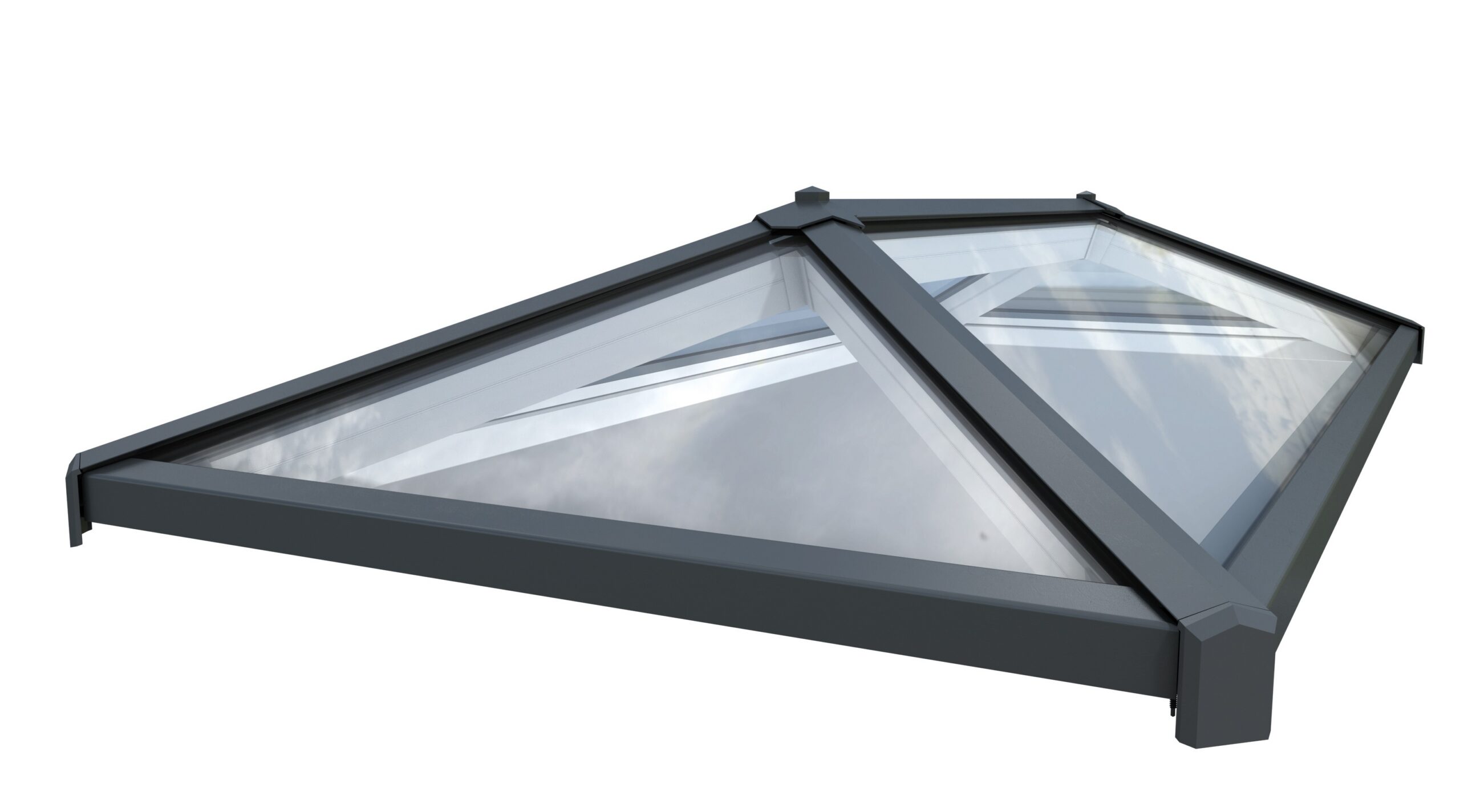
A roof lantern is one of the best ways to bring daylight into a flat-roofed kitchen or extension. Before you order, it is worth understanding whether you need planning permission. Here is a guide for houses in England.
Rooflights and permitted development
Under permitted development, rooflights and skylights can usually be added to a house without planning permission as long as:
- they do not protrude more than 150mm beyond the plane of the roof,
- they are no higher than the highest part of the existing roof, and
- side-facing rooflights are obscure-glazed and either non-opening or more than 1.7m above the floor.
A flat rooflight usually sits within the 150mm limit. A roof lantern, with its raised pitched glass, usually projects further – so on an existing roof it may fall outside these rules and need planning permission. Check with your local planning authority before you go ahead.
Roof lanterns on a new extension
If the lantern is part of a new extension, it is assessed as part of the extension. Many single-storey rear extensions are permitted development, and a lantern shown on the plans is considered with the rest of the design. If your extension needs planning permission, include the lantern in the application.
When you are more likely to need permission
- Listed buildings, which need listed building consent for significant changes.
- Conservation areas, National Parks and Areas of Outstanding Natural Beauty.
- Areas covered by an Article 4 direction.
- Flats and maisonettes, where the rules are different.
Building Regulations
Cutting a new opening in a roof, or adding a lantern to a new roof, normally needs Building Regulations approval. Building control will check the structure around the opening and the energy performance of the glazing. Our U-values guide explains the energy requirements.
Always check the Planning Portal or speak to your council if you are unsure. This article covers England; Wales, Scotland and Northern Ireland have their own rules.
Plan your roof glazing